As process engineers, we constantly evaluate equipment to maximize efficiency, scale up production, and ensure absolute batch uniformity. One of the most critical components in any fluid handling facility is the mechanical agitation system. Exploring the broad category of industrial mixers requires a deep understanding of fluid mechanics, mechanical stress, and complex process chemistry. We will explore the mechanics, structural considerations, and selection criteria for overhead mixing solutions to help you optimize your plant’s fluid operations.
Understanding the Fundamentals of Top-Entry Agitators
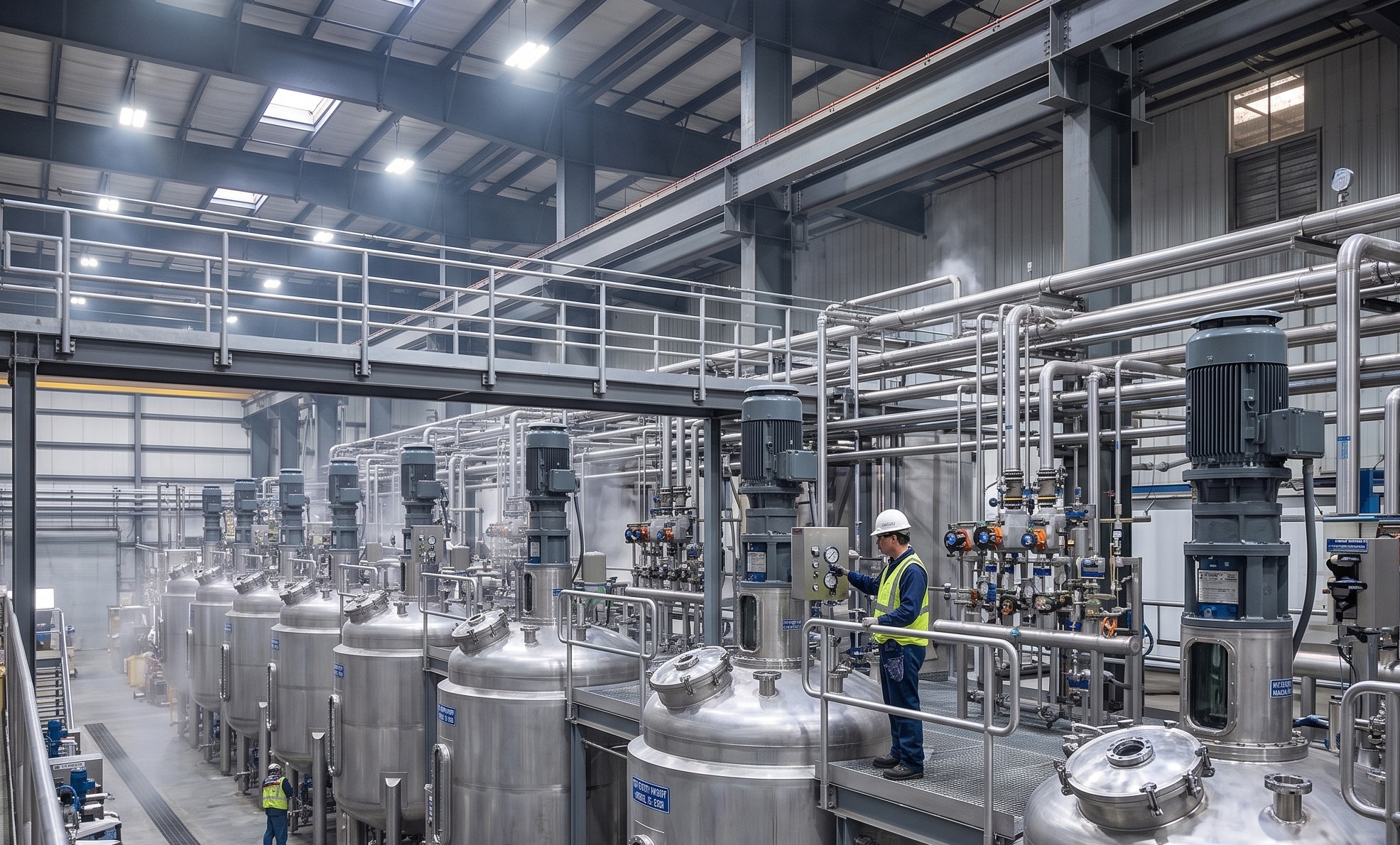
At the core of many manufacturing plants, overhead agitators provide the necessary kinetic energy to blend, suspend, or disperse materials within a stationary vessel. These units are typically mounted directly on the tank roof or supported by a dedicated structural bridge, utilizing a rigid vertical shaft that extends down into the fluid medium. To delve deeper into their precise mechanical design and operational benefits across different vessel geometries, I highly recommend reviewing our dedicated page on top-entry mixers.
The Role of Heavy-Duty Top-Entry Mixers in Large-Scale Operations
When dealing with high-volume tanks or highly viscous non-Newtonian fluids, standard off-the-shelf equipment simply fails under the immense mechanical loads. Incorporating heavy-duty top-entry mixers ensures that the shaft and impeller assemblies can withstand extreme bending moments and torque requirements without experiencing catastrophic failure. Engineers must meticulously calculate the fluid’s specific gravity and dynamic viscosity to specify rigid bearing housings and properly oversized shaft diameters. Proper specification ensures that the structural integrity of both the pressure vessel and the agitator is maintained even under severe turbulent flow conditions.
Selecting the Right Drive Mechanism for Your Process
The primary drive unit serves as the heart of the agitator, effectively translating raw electrical power from the motor into usable rotational mechanical force. The choice of the drive mechanism directly impacts plant energy consumption, routine maintenance schedules, and the overall mixing efficacy of the operation. For an expanded technical breakdown on how these specific drive assemblies interact with varying fluid properties, you should read our comprehensive article covering top-entry mixers in industrial fluid processing.
Advantages of Gear-Reduced Configurations in High-Torque Applications
Many demanding chemical reactions and solid-suspension tasks require incredibly slow rotational speeds combined with massive torque at the impeller. Specifying gear-reduced configurations allows engineers to drop the standard motor’s high rotational speed down to an optimal RPM designed specifically for large-diameter impellers. This mechanical advantage is absolutely crucial for blending shear-sensitive polymers or maintaining the homogeneous suspension of dense, settling slurries. By utilizing precision-machined helical or bevel gearboxes, we can achieve high mechanical transmission efficiency and significantly extend the operational lifespan of the entire agitation system.
Engineering Reliable Industrial Mixing Systems for Chemical Processing
Chemical manufacturing plants operate under incredibly stringent safety and performance standards, making equipment reliability completely non-negotiable from an operational standpoint. Designing industrial mixing systems for chemical processing involves mitigating severe risks associated with highly corrosive fluids, extreme temperature gradients, and volatile organic compounds. Materials of construction, such as high-grade austenitic stainless alloys or specialized fluoropolymer coatings, must be meticulously selected by metallurgists to prevent rapid equipment degradation. For a more comprehensive look at how we engineer these specific, highly demanding setups, you can revisit our top-entry mixers page to see our robust design methodologies in action.
Optimizing Fluid Dynamics for Process Efficiency
The ultimate goal of any mixing operation is to achieve a perfectly homogeneous state efficiently by intentionally manipulating internal fluid dynamics. Engineers must carefully match the exact impeller type, whether they specify axial flow pitch-blade turbines or radial flow flat-blade hydrofoils, to the specific chemical process requirement. Generating the correct flow pattern ensures adequate heat and mass transfer throughout the reaction vessel’s internal volume. By prioritizing precise engineering parameters over estimations, we ensure that every single batch meets the strictest quality control metrics required by modern industry standards.