
Gearmotor and Drive Replacement
Replacing an Obsolete or Failed Mixer Drive
When an agitator gearmotor fails or becomes obsolete, replacing it often involves more than finding a new motor and reducer. Agitation Resources can help identify a suitable replacement and make the adapter plate, coupling, or other components needed to fit your existing mixer.
Machining and fabrication happen in our own facility in Upstate South Carolina. Drive packages are specified for the duty the mixer will see, and the adapter hardware is made to suit the unit that is already in place. If the rest of the mixer is worn as well, a full rebuild or retrofit may make more sense than a drive on its own.
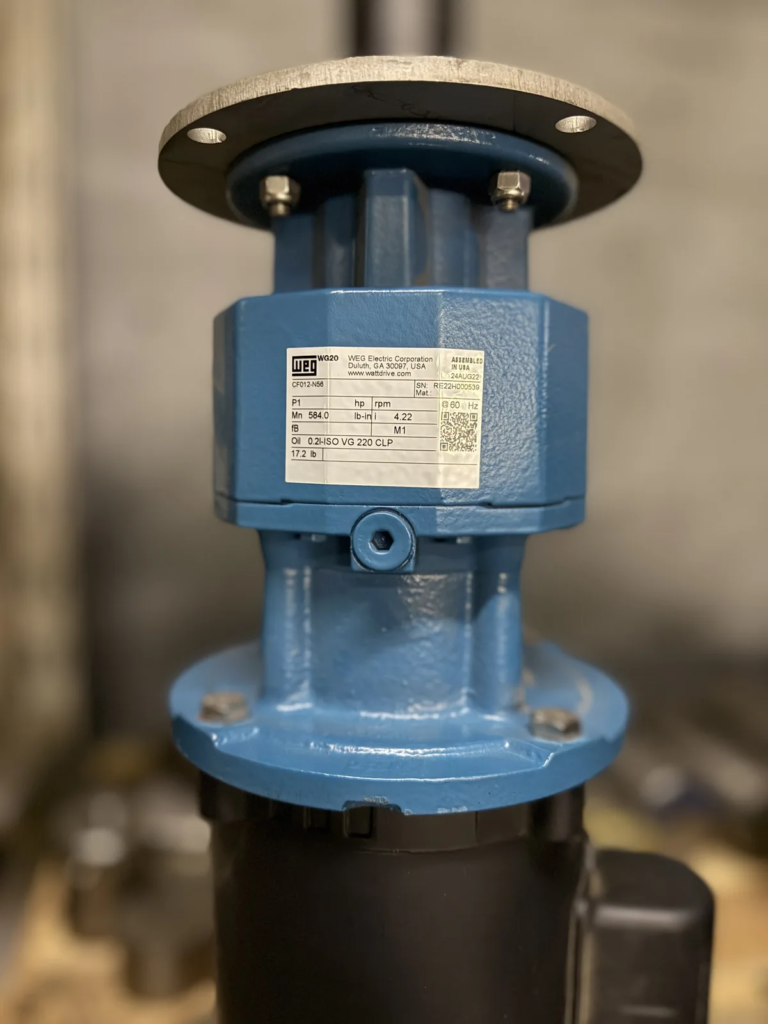
Start With Two Photos
Clear phone photos of both nameplates, the gearbox and the motor, are a good place to start. They tell us what is installed. Output torque, mounting geometry, shaft fit, process load, and any hazardous area requirement usually take a few measurements and a short conversation on top of that.
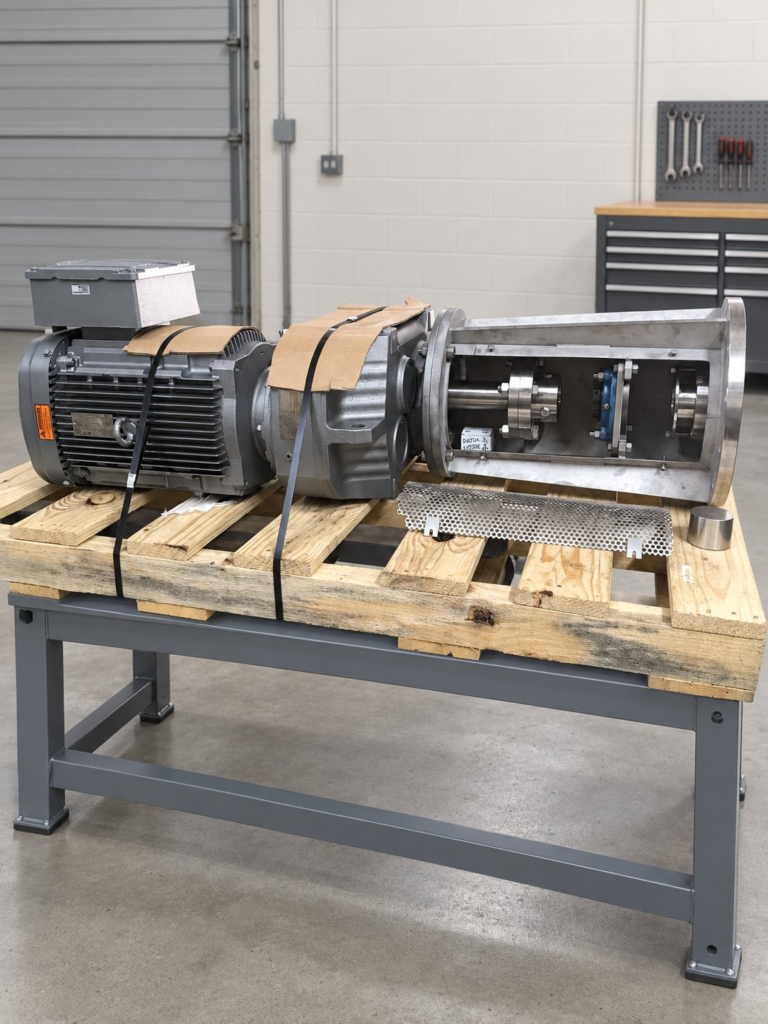
What We Need to Quote
- Gearbox nameplate — make, model, ratio, and service factor
- Motor nameplate — horsepower, RPM, frame size, and voltage
- Output shaft diameter, length, and keyway
- Mounting arrangement — foot, flange, or C-face, with the bolt pattern
- What failed, and whether the mixer is down now
- Where the mixer is located, and whether it sits in a classified area
Send drawings if you have them. If you do not, photographs and a few measurements are enough to get started. Working from a sample is normal here.
Why a Replacement Rarely Bolts Straight In
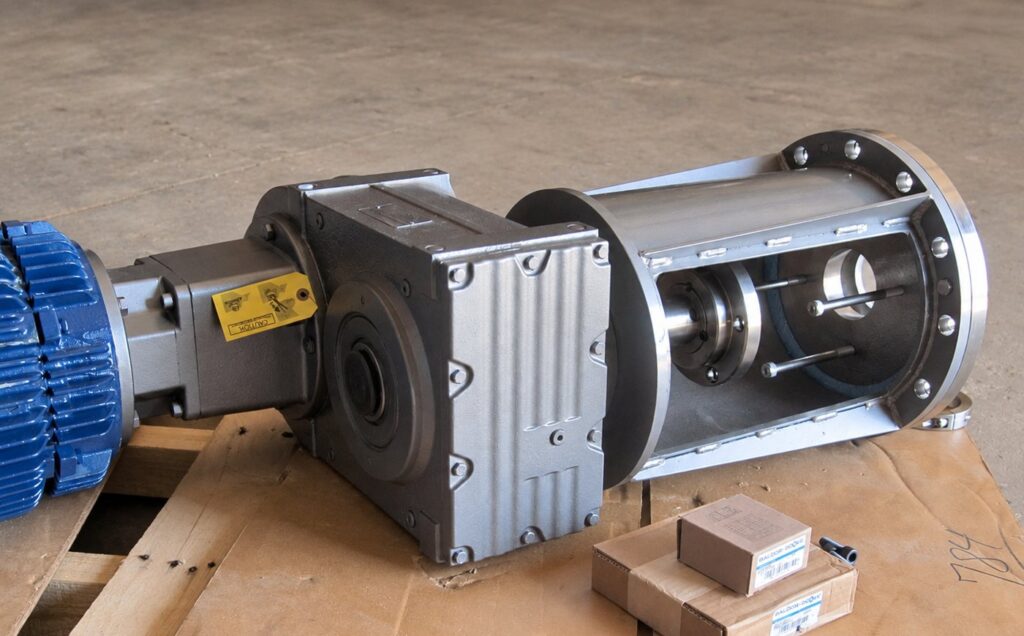
A new gearmotor may have a different bolt pattern, output shaft, or mounting height than the original. Most drive replacements need an adapter plate, a new coupling, or a shaft extension to bring the new drive onto the existing mount.
That machining is the part we do in house. The adapter hardware is designed and cut in our own facility. We fit it to the drive and check the alignment before the replacement reaches your site.
Re-Rating the Drive
A replacement is a good moment to look at whether the original drive rating still suits the way the mixer is used today. Processes change. Viscosity goes up, batch sizes grow, a tank gets repurposed. We review the original rating against the current operating conditions and size the replacement from the equipment and process data available. Where that data is thin, we will tell you what else we need before settling on a rating.
Hazardous Area Drives
We supply drives for classified areas. Tell us the classification the mixer sits in and we will specify a motor and enclosure to match it, whether that means an explosion-proof motor, a washdown or severe-duty enclosure, or an air motor where electrical is better avoided altogether.
What we need: the Class, Division and Group, or the Zone, along with the temperature code and any approval agency your site requires. If you are not sure what the area is rated for, the electrical drawings or the tag on the existing motor will usually say.
What We Can Supply
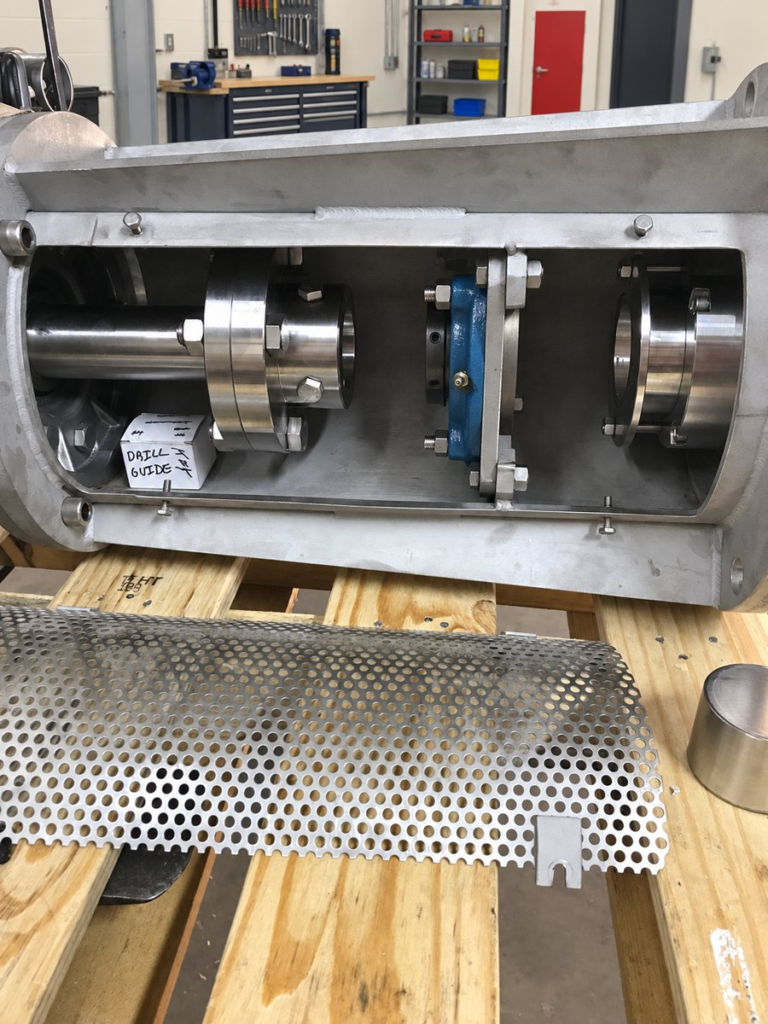
Scope depends on the condition of the existing mixer and on what you need. Any of the following can be part of a drive replacement:
- Motor and gear reducer sized to the application
- Adapter plate machined to the existing mount
- Coupling and coupling guard
- Pedestal or lantern housing where the arrangement calls for one
- Shaft extension, or a new shaft where the existing one is worn
- Mechanical seal or packing gland service at the same time
Seals, couplings, impellers, and wear parts can also be supplied on their own through aftermarket parts.
Equipment We Work On
We work on top-entry, side-entry, and portable mixers across chemical, water and wastewater, food, coatings, and general process plants.
Send us the nameplate information, photos and dimensions you have, along with the current process conditions. We can review older mixers and equipment with limited documentation, then identify what can be repaired, adapted or replaced.
We are not tied to one gearmotor brand. We select the reducer and motor that suit the application, the mounting, and the lead time, from the major industrial gearmotor manufacturers.
Turnaround
We source motors and gear reducers from suppliers such as SEW and NORD. Lead time depends on component availability and any machining or assembly required. We will confirm delivery in the proposal.
We give you a date with the quote, and we tell you what is setting it.
Send Us Your Nameplate Photos
Send us photos of the motor and reducer nameplates. Tell us what failed and whether the mixer is down.