
Custom Mixer Design
Built-to-Spec Agitation Assemblies
Off the shelf agitation equipment is built for a general case. When your process has specific requirements, we build the assembly around them: your fluid properties, your vessel geometry, and what the mix has to achieve.
Every design starts with your process numbers: viscosity, shear rate, blending time and heat transfer. We calculate the torque and impeller geometry the duty calls for, without putting unnecessary mechanical stress on the equipment or shearing your product. We design to the connection points and clearances available at the site, and confirm those interfaces before fabrication.
The sizing review includes tank geometry and operating level, viscosity and specific gravity at operating temperature, and solids loading or settling behavior where applicable. We evaluate impeller diameter, speed and pumping rate, shaft power and transmitted torque. Shaft deflection, critical speed and vessel baffling are checked as the configuration requires. This review also helps assess scale-up from laboratory or pilot batches to production.
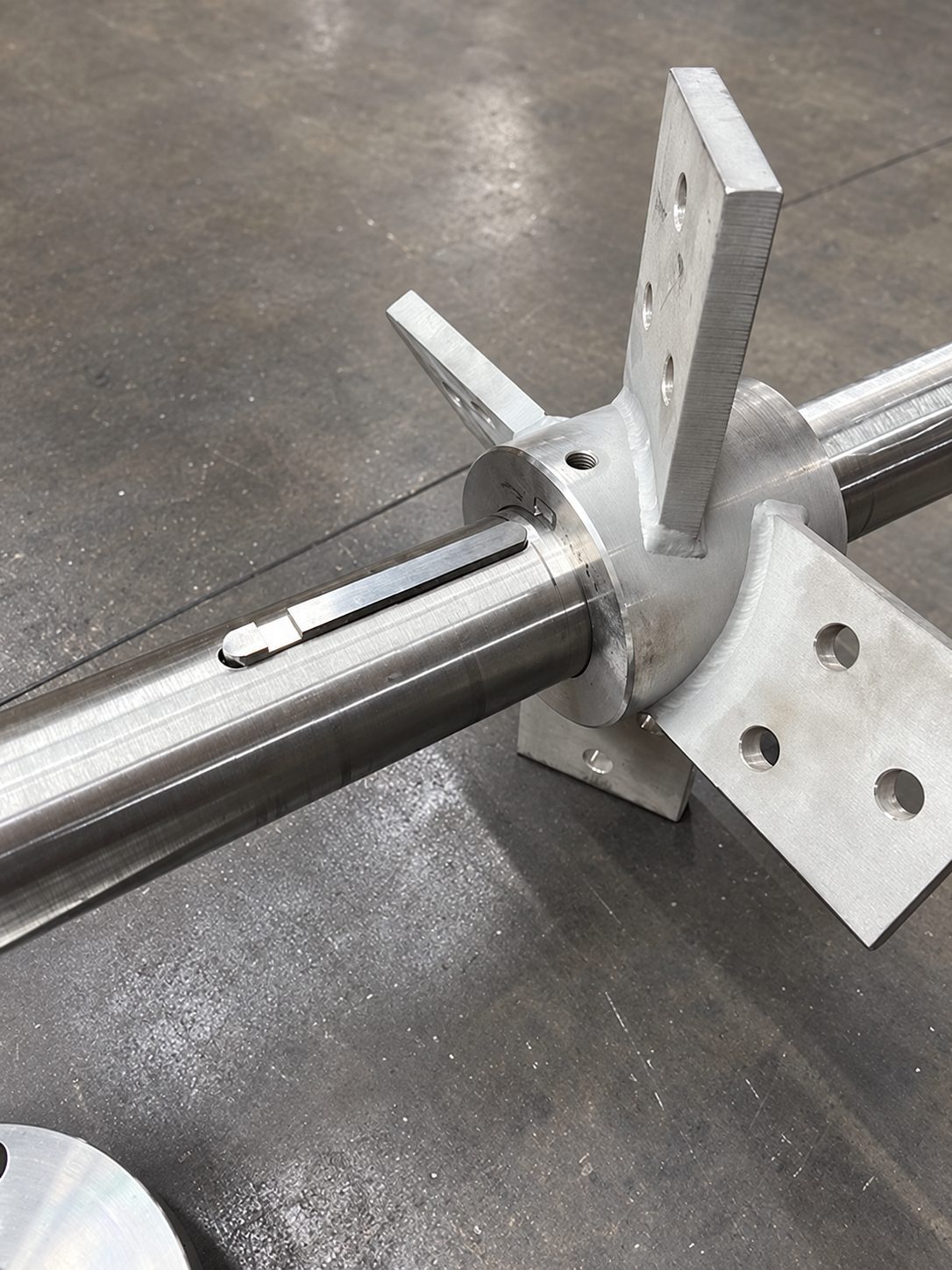
Featured Solution: Skid-Mounted Mixing Systems
Engineered precisely for your process parameters, we build both standalone assemblies and fully integrated skid-mounted units, sized to your viscosity, shear rate and batch volume.
Skid-Mounted Mixing Systems
When floor space is tight, a skid-mounted system puts the agitation assembly and its supporting equipment on one frame. The quote defines which supports, controls, piping and instruments are included for that project, since the split between our scope and the plant varies by job.
On skid frames we run finite element analysis where the loading warrants it, so the framework carries the dynamic loads, torque reactions and vibration it will see in continuous operation. Factory acceptance testing before shipment can be included when you ask for it.

Precision Mechanical Design and Material Selection
We select materials for the product, temperature and wear conditions. The bearing housing, shaft and seals are designed for the process and the loads they will carry. Tank geometry, fluid properties and mixing objective determine the sizing. We select the motor, gear reducer and shaft for the calculated torque, with margin.
Facility integration
We work with your facility engineers to confirm the mounting, clearances, structural loads and electrical requirements before we finish the design. Your quote will list the drawings, inspection requirements and startup support included in the job. General arrangement drawings, electrical schematics and other documents are supplied as quoted. We inspect assemblies before shipment.
What we need to quote
- Tank dimensions and working liquid level, and whether the vessel is open, closed or pressurized.
- Product viscosity and specific gravity at operating temperature, and solids loading if there are any.
- Batch size, cycle time, and what the mix has to achieve.
- Materials of construction your process requires, including any wetted-part restrictions.
- Available headroom and mounting arrangement, plus the power available at the location.
- Any area classification, and whether you want the unit skid-mounted.
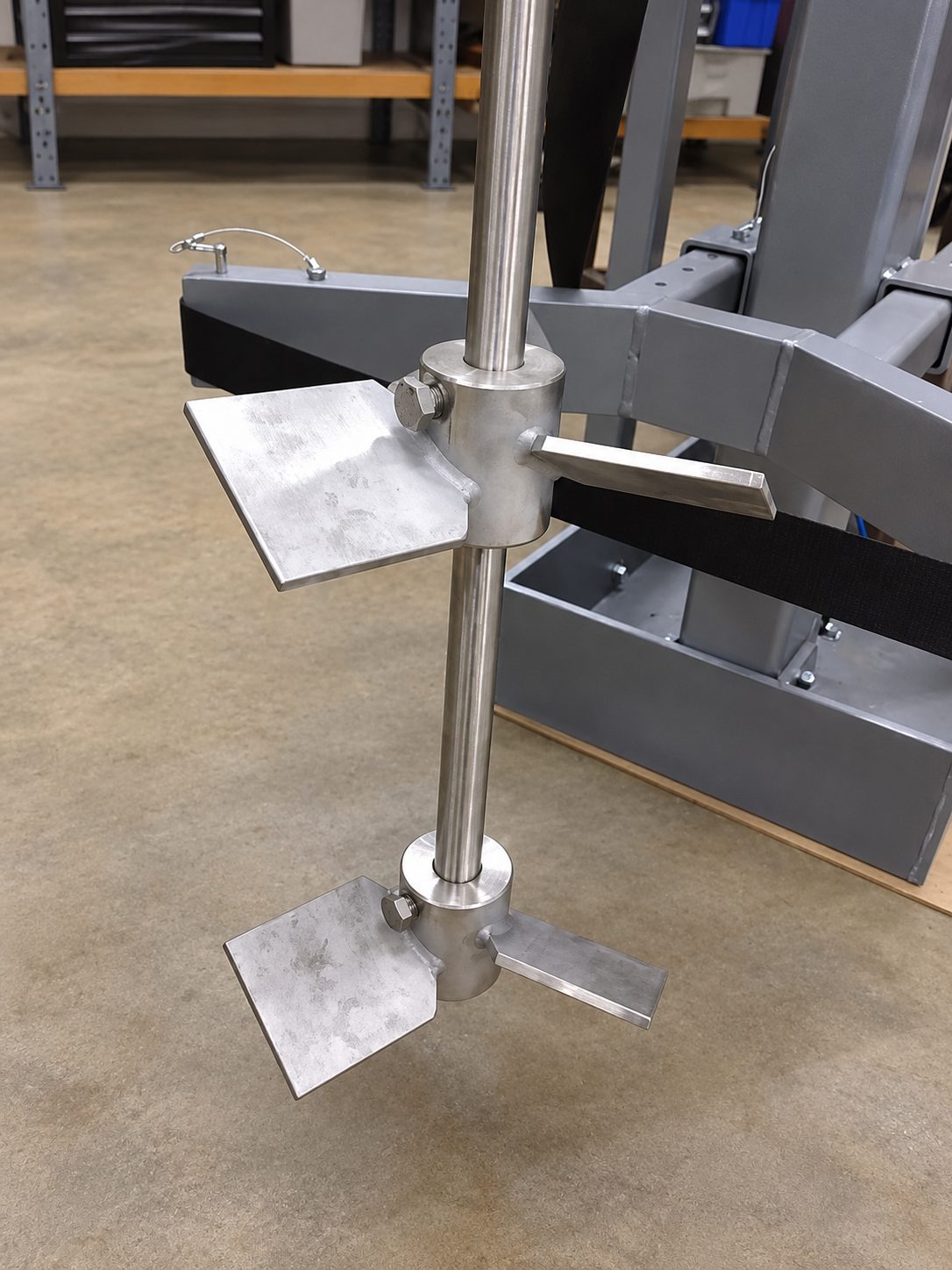
Benefits of Our Engineered Mixer Assemblies
- Sized from your fluid properties, vessel geometry and mixing objective
- Torque and impeller geometry calculated for the stated duty
- Designed to the connection points and clearances available at the site
- Machining, fabrication and assembly in house
- Drawings, inspection and testing scope defined in the quote
- Parts, rebuilds and review available after the unit is running
How we engineer a mixer
Every assembly follows the same path from first conversation to final inspection. Here is what each step involves.
Consultation
We start with your process, your product and what the unit has to achieve. Tank dimensions, viscosity range, batch size and duty cycle all shape the design.
Engineering
Sizing and impeller selection run through our own mixer design program. Structural analysis is run where the duty calls for it. The design is worked out before anything gets cut.
Manufacturing
Machining, fabrication and assembly happen in house, so fit and finish are checked as the unit is built.
Inspection
Each assembly is inspected and balanced before it ships. We tell you the design conditions it was built for, so you know what it is rated to do.
Send us your process conditions
Tank dimensions, product properties, batch size and what the mix has to achieve. That is enough for us to tell you what the unit needs and what it will cost.